Investigation
Heating and cooling at the same time
How competing control strategies quietly waste energy and cause comfort complaints, and how to find them in your BMS trends.
· 2 min read
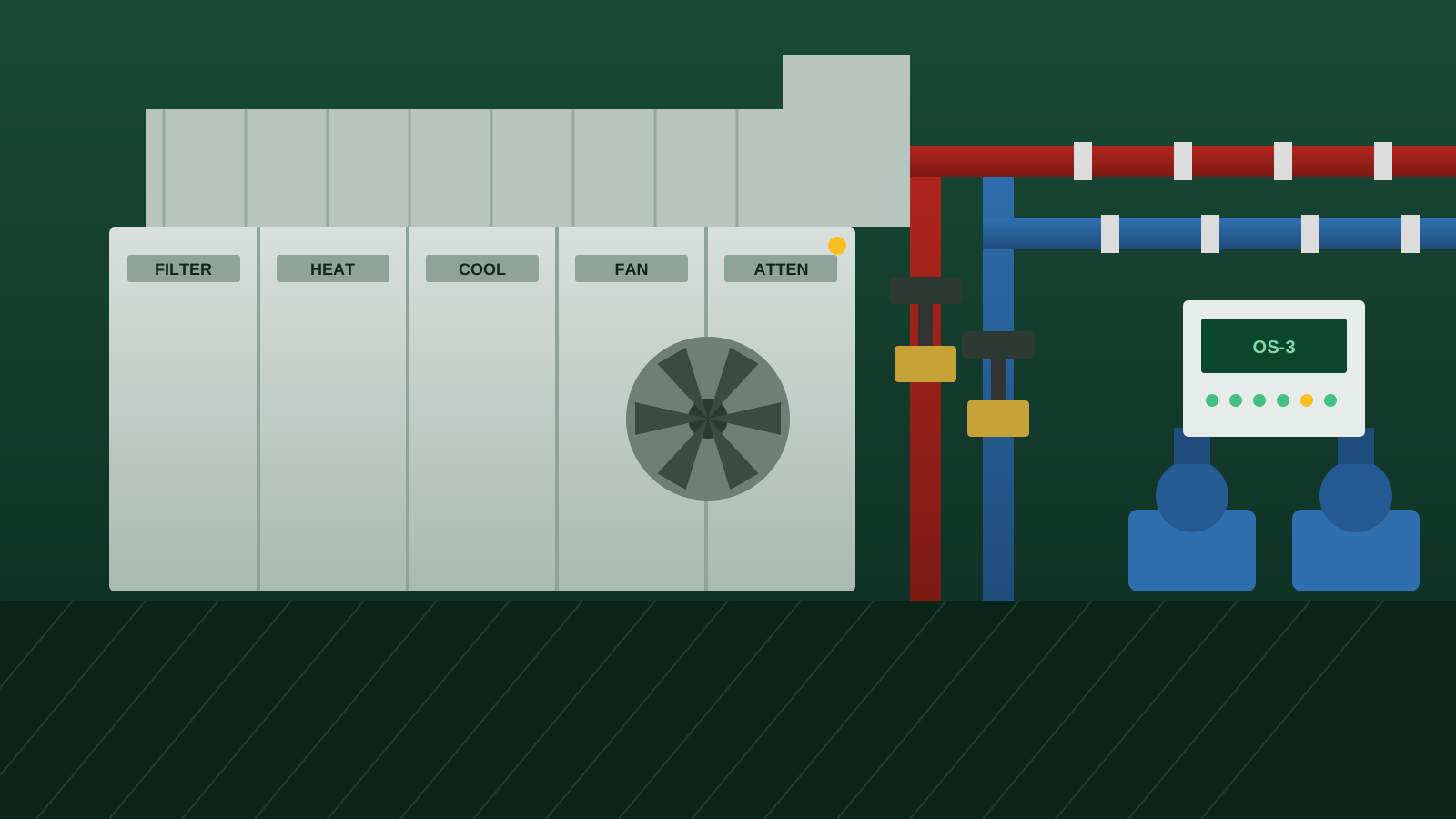
Few faults waste energy as quietly as simultaneous heating and cooling. Nothing trips, no alarm is raised, and the building may even feel roughly comfortable. But somewhere, plant is cooling air or water only for other plant to heat it back up again.
How it happens
It rarely comes from a single failure. More often it's two control strategies that each make sense on their own but work against each other when combined.
- An air handling unit cools supply air to a fixed setpoint while terminal reheat in the zones warms it back up.
- Adjacent zones served by different units fight over a shared open-plan space.
- A heating valve that doesn't fully close lets hot water through while the cooling valve opens to compensate.
- Setpoints with no deadband between heating and cooling, so the system hunts between the two.
- An override applied to solve one complaint and never removed.
What it looks like
The symptoms are often indirect: higher than expected gas and electricity use, chillers and boilers running together in mild weather, supply air temperatures that swing up and down, and zones that never quite settle. Occupants may complain about draughts or stuffiness rather than temperature.
How to find it
BMS trend logs are the best place to start. Plotting heating and cooling valve positions together for the same unit or zone quickly shows any overlap. Supply air temperature against setpoint shows whether control loops are stable or hunting. Comparing boiler and chiller run hours against outside air temperature shows whether both run when only one should.
Trends only tell you what the controller believes. Valves, actuators and sensors still need checking in the field, because a valve reported as closed may not be.
Fixing it
Most fixes are in the controls: adding or widening deadbands, resetting supply air temperature based on zone demand, retuning loops, repairing or replacing passing valves, and removing forgotten overrides. The result is usually lower energy use and fewer complaints, without new major equipment.